
8 Signs of Bed Bugs in San Francisco: What to Look For
Quick Answer
The 8 signs of bed bugs in San Francisco are: (1) unexplained bites on skin exposed during sleep, (2) dark fecal stains on mattress seams and nearby surfaces, (3) cast skins or shed exoskeletons on and around the bed, (4) live bed bugs visible in mattress seams or crevices, (5) blood stains on sheets or pillowcases, (6) a musty sweet odor in heavily infested rooms, (7) eggs or eggshells in harborage sites, and (8) neighbors reporting infestations in multi-unit buildings.
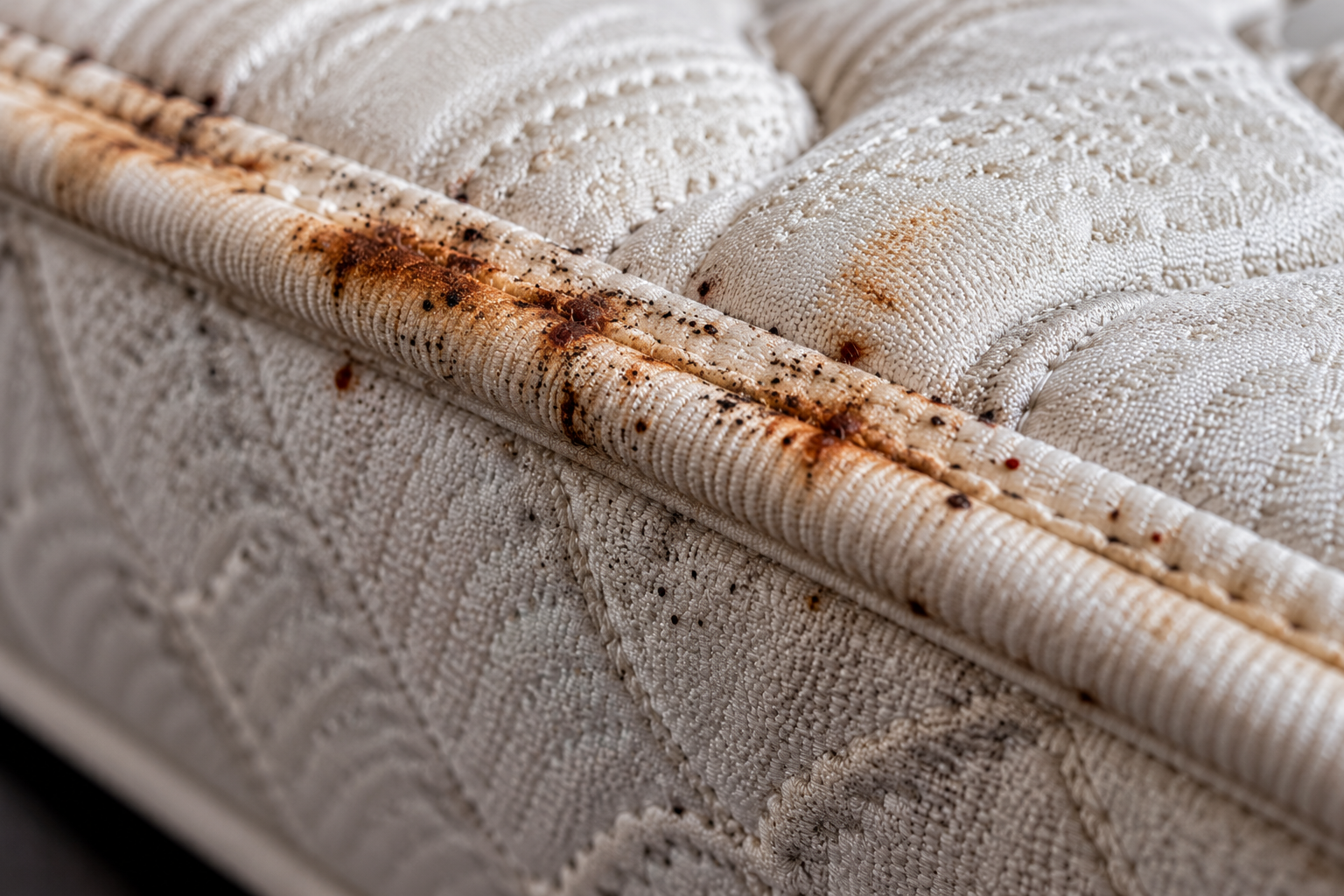
Bed bugs are small, flat, and skilled at staying hidden. Most people do not realize they have an infestation until it is past the early stage, which is when treatment is most straightforward. Knowing what to look for can mean catching an infestation weeks or months earlier, when treatment is faster, less disruptive, and less expensive. These are the eight signs to look for in your San Francisco home or apartment.
Sign 1: Unexplained Bites on Skin Exposed During Sleep
Bed bug bites appear on skin that is exposed during sleep, which typically means the face, neck, arms, shoulders, and upper chest. Bites are often in a linear or clustered pattern because bed bugs feed from the same area of skin multiple times before moving. Individual bites appear as small, raised red welts that itch, similar to mosquito bites. Some people do not react to bed bug bites at all and have no visible marks even during active infestation; others develop significant welts and intense itching.
Bites alone are not definitive evidence of bed bugs, because many insects bite during sleep and bites from different pests are visually similar. Flea bites concentrate on the lower legs and ankles; bed bug bites concentrate on upper body skin exposed at night. If you have unexplained bites, the next step is to inspect the sleeping area for physical evidence.
Sign 2: Dark Fecal Stains on Mattress Seams and Nearby Surfaces
Bed bug feces appear as small dark spots, roughly the size of a poppy seed or a period at the end of a sentence, that bleed into fabric fibers like an ink stain. They are most commonly found on mattress seams and piping, on the box spring, on the headboard, and on baseboards adjacent to the bed. On white mattress fabric, fecal staining appears as dark rust-brown to black spots. On a baseboard, it may appear as a series of small dark smears.
Fecal staining is one of the most reliable early-stage indicators of a bed bug infestation because it does not require seeing a live bug. If you see multiple small dark spots clustered on mattress seams, inspect further immediately.
Sign 3: Cast Skins and Shed Exoskeletons
Bed bugs molt five times during development from egg to adult, shedding their exoskeleton at each stage. Cast skins are translucent to pale golden shells that retain the shape of the bug at the life stage they were shed. They accumulate in harborage areas: mattress seams, the crack between the headboard and the wall, behind picture frames near the bed, and in box spring cavities.
Cast skins are easier to find than live bugs because they do not move and are not disturbed by light. A collection of cast skins in one area indicates established harborage at that location, meaning bed bugs have been living and feeding there long enough for multiple generations to molt.
Sign 4: Live Bed Bugs in Mattress Seams and Crevices
Adult bed bugs are oval, flat, and reddish-brown, roughly the size and shape of an apple seed. Unfed bugs are thinner and more elongated; fed bugs are rounder and darker. They prefer dark, narrow crevices and are rarely seen in the open during daylight. The most likely places to see live bugs are in the piping and seams of the mattress, in the gap between the box spring and the mattress, behind the headboard, and in the crevices of bed frame joints.
Using a flashlight and a credit card or flat tool to probe seams during inspection increases the chance of seeing a live bug. If you see a live bug, do not disturb the area further before calling for a professional inspection, as disturbing the harborage can scatter bugs and make inspection more difficult.
Sign 5: Blood Stains on Sheets and Pillowcases
Small rust-colored blood stains on white or light-colored sheets and pillowcases result from bed bugs being crushed during sleep, or from small bleeds at bite sites after feeding. These stains are distinct from other fabric stains because they are small, often oval or smear-shaped, and reddish-brown in color. They tend to appear in the area of the bed where you sleep rather than uniformly across the sheet.
Sign 6: A Musty, Sweet Odor in Heavily Infested Rooms
In severe infestations, bed bugs produce a distinct musty, sweet odor that some people describe as similar to coriander or overripe raspberries. This odor is produced by the bugs’ scent glands and becomes noticeable only at high infestation densities. Smelling this odor in a bedroom strongly suggests a long-established, high-population infestation and warrants immediate professional inspection.
Sign 7: Eggs and Eggshells in Harborage Sites
Bed bug eggs are tiny, white, and approximately 1 millimeter long, similar in size to a grain of uncooked white rice. They are sticky when freshly laid and are often found in clusters in protected harborage sites: deep within mattress seams, in the wooden frame of the box spring, behind electrical outlet covers near the bed, and in crevices of the headboard. Eggshells (hatched eggs) are similarly small but lack the pearlescent appearance of unhatched eggs.
Eggs are difficult to see without a magnifying glass or strong flashlight. Finding them confirms an active infestation where reproduction is occurring.
Sign 8: Neighbors Reporting Infestations in Your San Francisco Building
In San Francisco’s multi-unit Victorian and Edwardian buildings, a bed bug infestation in one unit is a risk factor for adjacent units. Bed bugs travel through shared walls via pipe penetrations, electrical conduit, and structural gaps in older construction. If you learn that a neighbor has or recently had a bed bug infestation, a precautionary inspection of your unit is a sensible response, even if you have no direct evidence of infestation in your own space.
Under California Civil Code Section 1954.603, landlords must disclose known infestations before renting a unit. If you suspect your landlord has knowledge of building-level infestations that has not been disclosed, a professional inspection provides documentation of your unit’s status and protects your rights in any subsequent dispute.
If you have identified any of these signs in your San Francisco home, call (415) 520-2381 for a free professional inspection. Early detection means simpler, faster treatment. See also our guide to the full treatment process.
Serving San Francisco and All Bay Area Communities Within 50 Miles
Specialized Bed Bug Solutions serves the entire city of San Francisco and every community within a 50-mile radius.


One Comment